

Home /
Client success
Client success
What changed, in the client’s terms.
Every engagement here is written up the same way: what the client was dealing with, what we built, and what they have now.
Nothing filed under that practice yet.
Corporate wellness · Platform build

A wellness platform, from vision to live
Corporate wellness is delivered by many small providers, and the companies buying it were holding the programme together with spreadsheets and email. Enrolment was manual, provider onboarding was manual, and nobody had a current view of who was using what. Read the case study→ Health insurance · CI/CD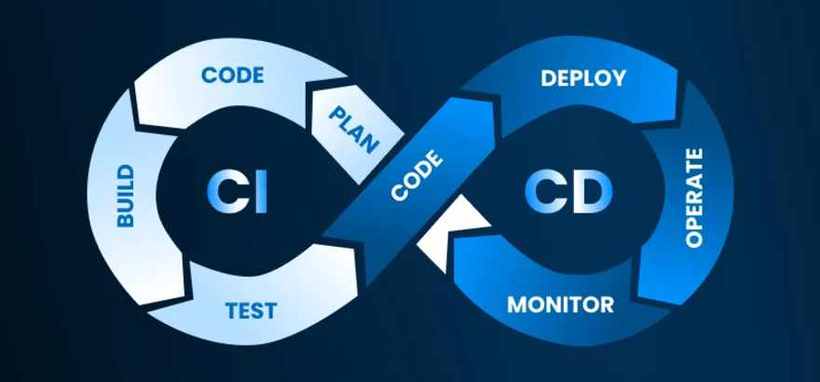
From a three-hour deployment to ten minutes
Deployments were done by hand. Each release needed several stakeholders available at the same time, dependencies were tracked informally, and the window was two to three hours with downtime inside it. Read the case study→ HR technology · Cloud & DevOps
Infrastructure that could keep up with the growth
The platform was growing quickly and scaling by adding instances, because that was the lever available. The Kubernetes estate had grown with it rather than being designed for it. Read the case study→ Healthcare · Platform replacement
Replacing an EHR without pausing care
The legacy EHR was rigid, slow and poorly interoperable. Placing an order took seven or more clicks, transcription was done by hand, and every workflow carried an accumulated workaround on top of it. Read the case study→ Fintech · Product modernisation
A finance platform that could carry its own data
The product was straining under data volume. Reporting was compiled rather than produced, and the interface made accurate financial information harder to reach than it should have been. Read the case study→ Private cloud · ServiceNow ITSM
Untangling a complex IT environment
A complex IT environment on legacy ITSM tools that could not meet growing demand. Incidents, changes and problems were handled largely by hand, consuming a significant share of the IT team’s time. Read the case study→ Consumer credit · Document automation
The manual redaction step, removed
Sensitive customer documents were read and redacted by hand before they could move through the workflow. Throughput was capped by headcount, and errors surfaced downstream where they were expensive. Read the case study→ Identity management · Containers
Core applications made portable
Core components were tied to the machines they ran on. Scaling meant provisioning, deployments were single events against single environments, and recovery from a bad one meant rebuilding by hand. Read the case study→ EdTech · Mobile
India’s first fantasy quiz app
Merit scholarships exist in quantity, but students struggle to find them, work out whether they qualify, and complete applications designed for administrators rather than applicants. Read the case study→ Compliance · Web application
Compliance evidence that stops being a scramble
Obligations under ICOFR, IFC and SOX were tracked in whatever each subsidiary happened to use. Evidence was assembled by hand before each audit, and the same questions were answered from scratch every cycle. Read the case study→ CRM software · Financial services integrationA lender integration that holds its security
Joining a lender’s backends to the client’s platform without loosening either side’s security requirements, where the usual integration shortcuts were not acceptable. Read the case study→ Insurance · Customer operationsOne workspace instead of five logins
Agents could not get at real-time policy information for existing customers, and most complaints were not resolved on the first call. Read the case study→ Blockchain infrastructure · MonitoringWatching blockchain nodes from the outside in
The platform’s whole service is the condition of its customers’ blockchain nodes: endpoint health, status visible in real time, and CPU, memory and disk read early enough to act on. Read the case study→ Review management · Conversational AIChatbots their customers build themselves
The platform wanted to give its existing customers a chatbot, which meant the customers had to be able to build one — not file a request for one. Read the case study→ Identity management · Observability
An observability stack built to order
A complex cloud estate with no central place to see it, producing millions of logs an hour that were effectively unqueryable during an incident. Read the case study→ Solar energy · Field operationsField sales and installation on one system
Field sales and service representatives were not matched to customers by location or by the service actually needed, so the wrong person was often assigned. Read the case study→ Payments · Log management
Centralised logging across a payment estate
Log management could not surface security events, and payment problems were found by reading logs manually — usually after a customer had noticed. Read the case study→ API platform · MonitoringOne view across Kubernetes clusters and accounts
Clusters sat in separate AWS accounts with no central place to watch them, so problems were found late and availability suffered for it. Read the case study→ Aviation · On-premise to Azure
VMware to Azure, without stopping the airline
The estate was a set of interdependent applications on VMware, supporting operations that do not stop. The hard part was never the individual move; it was what breaks when systems that talk to each other sit on different sides of the migration for a period. Read the case study→ APM vendor · Developer experienceFinding out why their own tool was hard to fit
The vendor could not see where engineers were losing time when fitting their APM tool to a customer application, which made the gap between a working install and a difficult one hard to close. Read the case study→ Healthcare · Systems integration
EMR, HIS and PM talking to each other
The provider ran an Electronic Medical Record system, a Hospital Information System and a Practice Management system that exchanged nothing. Staff moved data between them by hand. Read the case study→ Private cloud · Billing integration
Charging for what customers actually consume
The provider needed to bill on actual consumption — CPU, memory, storage and bandwidth — and the systems holding that consumption data were not the systems producing invoices. Read the case study→ Healthcare · Synthetic data
Training data without patient data
The client’s data was cluttered and incomplete — a poor basis for training — and it was patient data, so the usual remedies for poor data quality were constrained by privacy. Read the case study→ Management consulting · Process automationA transaction workflow that keeps the detail
The firm processed a large daily volume of transactions and needed a record of each one at a granular level — not a summary, the detail. Read the case study→ Retail · Computer vision
Demographics from a masked shop floor
The retailer’s predictive analysis depended on demographic data the cameras could no longer capture: masks defeated the existing recognition, and customers with carts could not be tracked reliably. Read the case study→ Retail · Business intelligenceOne view over data from several systems
Data arrived from several systems and there was no consolidated view of it, so predictive analysis was not possible and ordinary decisions were made on partial figures. Read the case study→ Payments · MobileAccount-to-account payments in a few taps
The client wanted payments that settle in seconds — person to person, account to account — without the setup that usually stands between a new user and their first transaction. Read the case study→ Food and beverage · Sales operationsSales orders placed against live stock
Adding sales people and agents to the existing ERP meant buying and wiring together a further set of third-party tools, each with its own cost and its own login. Read the case study→ CRM platform · Monitoring
Nowhere for a problem to hide
Customers integrating the monitoring tool with their own applications were leaving configuration gaps, and the gaps sat precisely where distributed performance problems live. Read the case study→Let’s talk
Bring us the thing that was quoted too high.
We will tell you in one call whether the new economics change the answer — and if they do not, we will say so.